

Digital detox is a practice of intentionally reducing or taking a break from using digital devices like smartphones, computers, and social media in order to reduce distractions, improve focus, and enhance mental well-being.
In today’s world, almost everyone is addicted to their phone. We wake up and check notifications, scroll social media for hours, and keep switching between apps all day. This habit reduces focus, wastes time, and lowers productivity.A digital detox can help you fix this problem and take control of your time again.
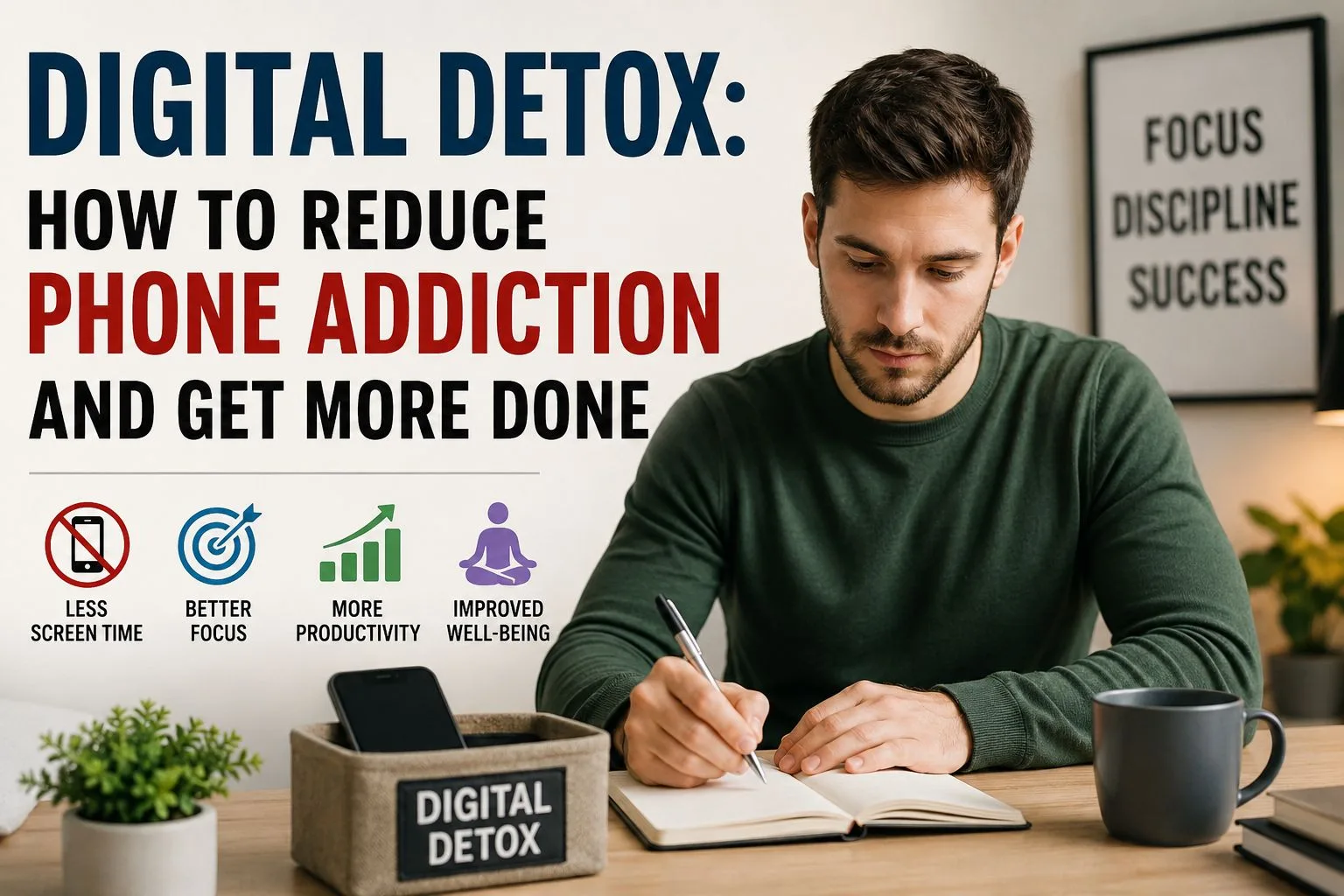
Table of Contents
What is Digital Detox?
Digital detox is the practice of reducing or taking a break from digital devices like smartphones, computers, and social media to improve focus, mental health, and productivity.
It helps people reduce phone addiction, manage screen time, and live a more balanced life away from constant digital distractions.
Why Are We Addicted to Phones?
We are becoming addicted to phones because modern apps are designed to capture and hold our attention for as long as possible. Social media platforms, games, and video apps use powerful psychological tricks that make us check our phones again and again.
One of the main reasons is instant dopamine rewards. Every like, comment, message, or video gives a small pleasure boost to the brain, which creates a habit loop and leads to phone addiction.
Another big reason is fear of missing out (FOMO). People feel they might miss important news, updates, or social interactions if they don’t constantly check their phones.
Apps also use features like infinite scrolling, auto-play videos, and push notifications to keep users engaged without stopping.
Over time, this leads to reduced focus, increased distractions, and higher dependency on digital devices.
To understand more about how technology affects human behavior, you can visit: Center for Humane Technology
Signs of Phone Addiction
Many people use smartphones daily, but when usage becomes uncontrollable, it can turn into phone addiction. Below are some common signs that show you may be spending too much time on your phone.
- Constant phone checking: You check your phone every few minutes even without notifications or reason.
- Loss of focus: You find it difficult to concentrate on work, studies, or conversations because of frequent distractions.
- Excessive social media use: You spend hours scrolling Instagram, YouTube, or other apps without realizing time passing.
- Anxiety without phone: You feel restless, anxious, or uncomfortable when your phone is not nearby.
- Sleep disturbance: Using the phone late at night affects your sleep quality and makes you feel tired during the day.
- Ignoring real-life activities: You prefer using your phone over spending time with family, friends, or hobbies.
These signs often indicate that your screen time is affecting your daily life and productivity. Reducing phone usage can significantly improve your focus and mental well-being.
Learn more about technology habits and digital wellness here: Digital Wellbeing Guide
How to Reduce Phone Addiction
Reducing phone addiction is not about completely stopping phone use, but about building healthy digital habits that help you stay focused, productive, and mentally relaxed. With small daily changes, you can significantly reduce screen time and regain control of your attention.
- Turn off unnecessary notifications: Notifications are one of the biggest causes of distraction.
Disabling them helps reduce constant phone checking. - Set app time limits: Use built-in screen time tools to limit usage of apps like social media,
so you don’t spend more time than needed. - Create phone-free zones: Avoid using your phone in places like the bedroom, dining table, or study area
to improve focus and sleep quality. - Use the 20-20-20 rule: After every 20 minutes of screen use, look at something 20 feet away for 20 seconds
to reduce eye strain and break continuous usage habits. - Replace phone time with productive habits: Instead of scrolling, try reading, exercising, or learning new skills to build better routines.
- Start your day without a phone: Avoid checking your phone for the first 30–60 minutes after waking up to improve mental clarity and focus.
By following these steps consistently, you can reduce digital distraction, improve productivity, and build a healthier relationship with technology.
Learn more about digital habits and well-being here: Digital Wellbeing Resources
Digital Detox: Phone Usage vs Productivity (Charts & Insights)
Understanding how phone addiction affects your daily productivity is important. The charts below show how reducing screen time can improve focus, energy, and output in daily life.
1. Screen Time vs Productivity Level
High Screen Time (5–8 hours/day)
Low productivity (30%)
Moderate Screen Time (2–4 hours/day)
Medium productivity (60%)
Low Screen Time (1–2 hours/day)
High productivity (90%)
2. Phone Usage Impact on Focus
With Heavy Phone Use
Low focus level (35%)
With Digital Detox Practice
High focus level (85%)
Why These Charts Matter for Digital Detox
These charts clearly show the relationship between phone addiction and reduced productivity. When screen time is high, focus and efficiency drop significantly. However, when users follow a digital detox, their productivity, mental clarity, and work output improve.
Search engines like Google prefer content that is easy to understand, structured, and informative. Using visual charts with keywords like digital detox, phone addiction, screen time, and productivity helps improve SEO ranking and user engagement.
Digital Detox: Comparison, Impact & Real-Life Results
Understanding digital detox becomes easier when we compare real-life habits of phone addiction with a balanced digital lifestyle. The tables below show how screen habits directly affect productivity, focus, and mental health.
These insights can help you reduce screen time and build better daily habits for a more productive life.
Table 1: Phone Addiction vs Digital Detox (Comparison)
| Factor | Phone Addiction | Digital Detox |
|---|---|---|
| Focus Level | Low due to constant distractions | High with deep concentration |
| Screen Time | 5–8 hours daily | 1–3 hours controlled use |
| Productivity | Unstable and low output | Consistent and improved performance |
| Mental Health | Anxiety and overstimulation | Calm mind and reduced stress |
| Sleep Quality | Disturbed sleep cycle | Better and deeper sleep |
This comparison clearly shows that reducing phone addiction can significantly improve your mental clarity and daily performance.
Table 2: Daily Time Wasted on Phone Usage
| Activity | Time Wasted Per Day | Impact on Life |
|---|---|---|
| Social Media Scrolling | 2–3 Hours | Reduces focus and productivity |
| YouTube / Short Videos | 1–2 Hours | Wastes learning and work time |
| Random Phone Unlocking | 1 Hour+ | Breaks concentration repeatedly |
| Notifications Checking | 30–60 Minutes | Creates unnecessary distraction loops |
These habits silently reduce your daily productivity and increase mental fatigue. A proper digital detox routine helps reclaim this wasted time.
Table 3: Before vs After Digital Detox Results
| Area | Before Digital Detox | After Digital Detox |
|---|---|---|
| Morning Routine | Phone checking immediately | Focused and productive start |
| Work Output | Frequent distractions | Deep work and faster completion |
| Energy Level | Low and tired feeling | Fresh and energetic mind |
| Attention Span | Short and unstable | Long and focused attention |
After practicing digital detox, users often experience better focus, improved productivity, and reduced stress in daily life.
Benefits of Digital Detox
A digital detox helps you take control of your time by reducing unnecessary screen time and limiting distractions from smartphones and social media. It improves your overall lifestyle, productivity, and mental well-being.
When you reduce phone addiction, your mind becomes clearer, your focus improves, and you start completing tasks faster with better quality.
- Improved Focus: Digital detox reduces distractions and helps you achieve
deep concentration while working or studying. - Higher Productivity: Less phone usage means more time for important tasks,
leading to better productivity in daily life. - Better Mental Health: Reducing social media overload helps lower
stress, anxiety, and overthinking. - Improved Sleep Quality: Avoiding screens before bed supports a healthy sleep cycle
and reduces sleep disturbance. - More Free Time: Cutting down unnecessary scrolling gives you extra time for
hobbies, learning, and personal growth. - Better Relationships: Less phone use improves real-life communication with family
and friends, strengthening social bonds.
Overall, a digital detox helps you build a balanced lifestyle by reducing digital distraction and improving your focus, health, and productivity.
Frequently Asked Questions (FAQ) – Digital Detox
Here are some common questions about digital detox, phone addiction, and reducing screen time.
What is a digital detox?
A digital detox is the practice of reducing or taking a break from digital devices like smartphones, social media, and computers to improve focus, mental health, and productivity.
Why is phone addiction harmful?
Phone addiction can reduce focus, increase stress, disturb sleep, and lower productivity by keeping your mind constantly distracted.
How long should a digital detox last?
A digital detox can start from a few hours daily, a weekend break, or even longer periods depending on your usage habits. Consistency is more important than duration.
What are the benefits of reducing screen time?
Reducing screen time improves focus, increases productivity, reduces anxiety, and helps you sleep better.
Can digital detox improve productivity?
Yes, a proper digital detox helps eliminate distractions and allows you to focus deeply on important tasks, improving overall productivity.
Final Thoughts on Digital Detox
The main idea of a digital detox is to help you take control of your time and reduce unnecessary phone addiction. In today’s fast digital world, it is very easy to get distracted by social media, videos, and constant notifications.
By practicing a digital detox, you can improve your focus, increase your productivity, and build healthier daily habits. Even small changes like reducing screen time or avoiding your phone in the morning can make a big difference.
The goal is not to completely remove technology, but to use it in a smarter and more balanced way. When you control your phone, you control your time, energy, and attention.
Start small, stay consistent, and you will slowly notice a better lifestyle, improved mental clarity, and higher work efficiency.
People Also Ask (PAA)
Click on the questions below to learn more about digital detox, phone addiction, and reducing screen time.
How do I stop phone addiction naturally?
You can stop phone addiction by turning off unnecessary notifications, setting app time limits, avoiding your phone in the morning, and replacing scrolling with productive activities like reading or exercise.
What happens when you reduce screen time?
When you reduce screen time, you improve focus, sleep better, reduce stress, and increase overall productivity. Your mind becomes calmer and more balanced.
Is digital detox good for mental health?
Yes, a digital detox is very good for mental health. It helps reduce anxiety, improves emotional balance, and lowers mental overload caused by constant notifications and social media use.
How can I be more productive without my phone?
You can improve productivity by using time blocking, focusing on one task at a time, avoiding distractions, and keeping your phone away while working or studying.
How long should a digital detox last?
A digital detox can start from a few hours daily or a full weekend break. The best approach is to start small and gradually increase the duration based on your comfort level.